Dental Implant Restorations in Louisville, KY
A specialist places the implant. Dr. Beam builds the tooth that goes on it, matched to the smile you already have.
Dental Implant Restorations
An implant is the closest thing to getting your tooth back. It stands on its own, it does not touch the teeth beside it, and it keeps the bone in your jaw from shrinking away.
Implant treatment has two halves. A surgeon places the post in your jaw. Then a dentist designs and fits the crown that sits on it, the part you actually see and chew with. Dr. Beam does the second half, and she does it well.
Thinking about replacing a missing tooth?
Call (502) 206-2460 and we will walk you through the whole path, including the part we hand off.
What Is an Implant Restoration?
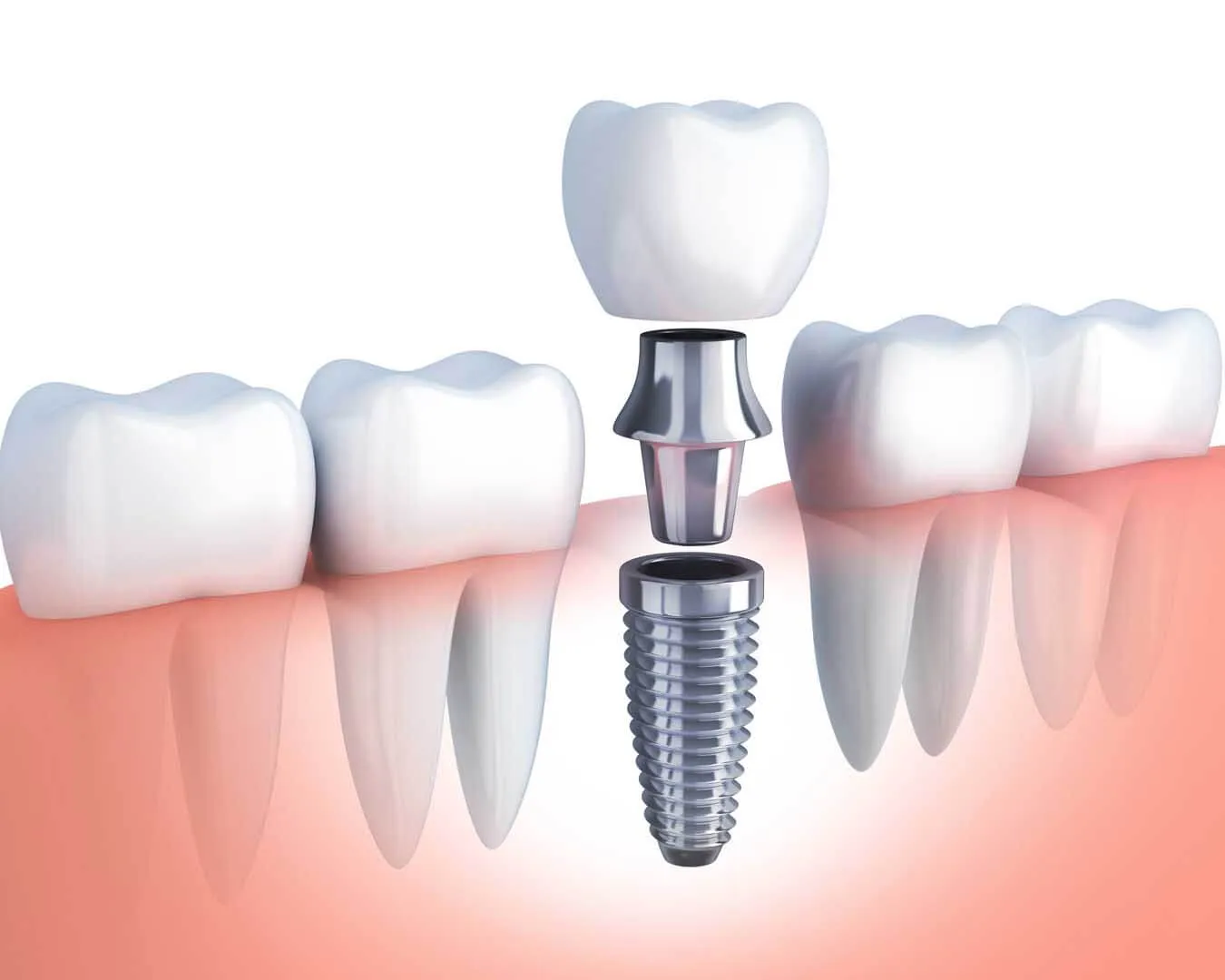
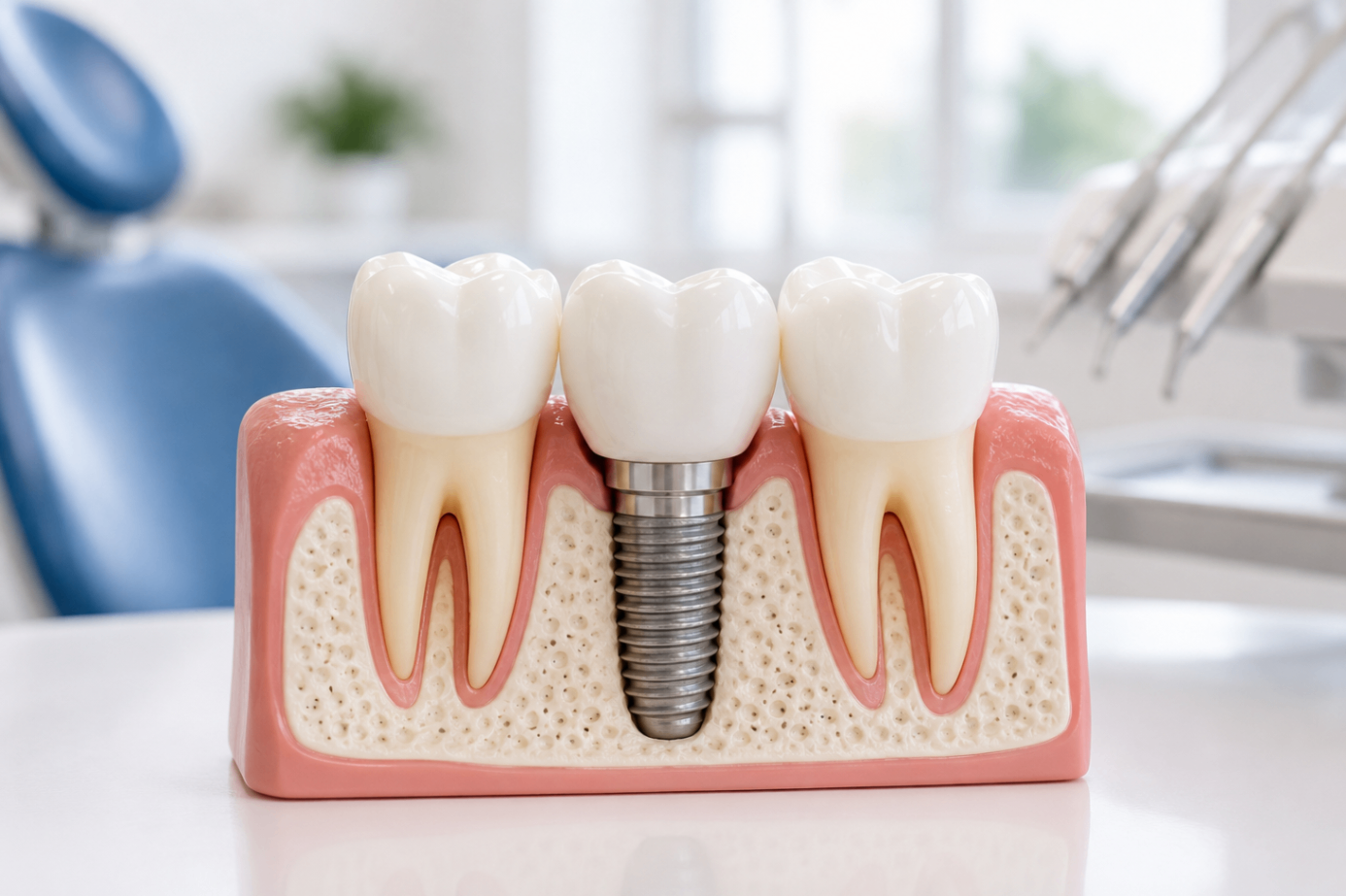
A dental implant is a small titanium post placed into your jawbone where a tooth root used to be. The bone grows around it over a few months and holds it firmly.
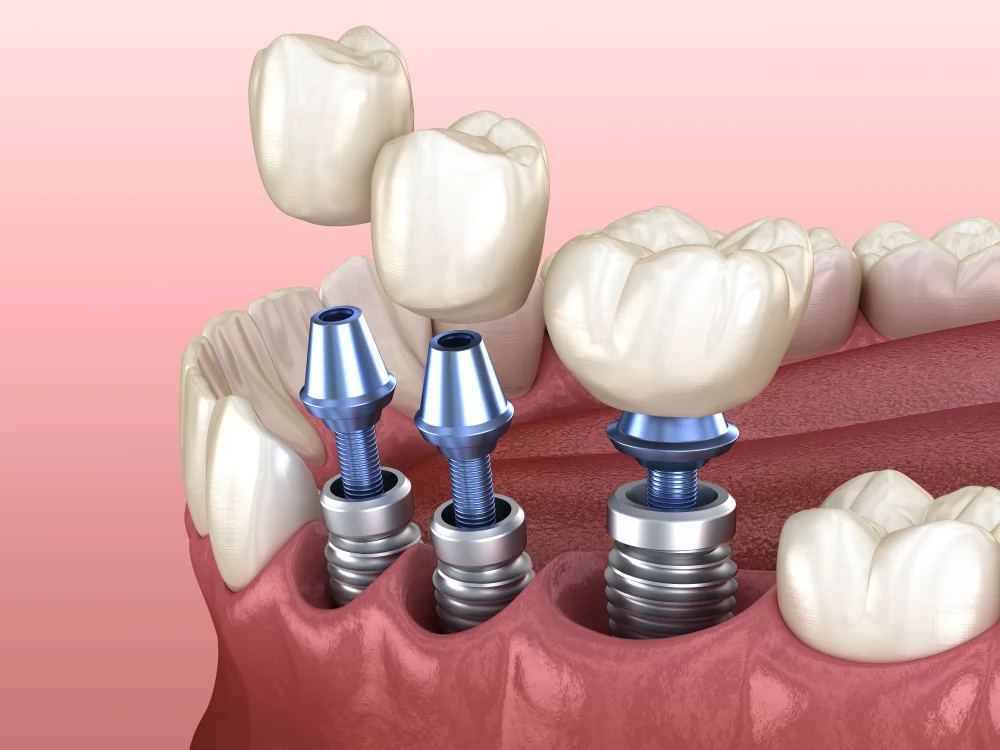
The restoration is everything above that post: the connector and the custom crown that becomes your visible tooth. That crown determines how the tooth looks, how it meets the teeth around it, and how your bite feels.
How we work. Dr. Beam does not perform implant surgery. She refers you to an oral surgeon she trusts for placement, stays involved in planning where the implant should go, then restores it once your jaw has healed. You get a specialist for the surgical part and a familiar office for the rest.
Problems an Implant Restoration Solves

A missing tooth causes problems that build slowly.
- A gap that shows when you smile or talk.
- Neighboring teeth drifting into the space and changing your bite.
- Jawbone shrinking where the tooth used to be, which changes your face over years.
- Chewing shifted to one side, which wears those teeth faster.
- A partial denture you would rather not wear.
- A failing bridge you do not want to replace with another bridge.
An implant is the only replacement that keeps the bone stimulated. Bridges and dentures sit on top of the gum. The bone underneath keeps shrinking.
How Implant Treatment Works

We examine the site, take X-rays, and talk about whether an implant is the right fit for you.

We coordinate with the oral surgeon on where the implant should sit, planned around the crown that will go on it.

The surgeon places the implant. That visit happens at their office.

Your jaw heals and bone fuses to the post, usually over three to six months. You are not without a tooth during this: a temporary is arranged.

Once healed, you come back to us. We take an impression of the implant and the teeth around it.

We choose the shade and shape with you, the same way we would for a front crown. We fit the crown, check the bite carefully, and secure it in place.
We examine the site, take X-rays, and talk about whether an implant is the right fit for you.
We coordinate with the oral surgeon on where the implant should sit, planned around the crown that will go on it.
The surgeon places the implant. That visit happens at their office.
Your jaw heals and bone fuses to the post, usually over three to six months. You are not without a tooth during this: a temporary is arranged.
Once healed, you come back to us. We take an impression of the implant and the teeth around it.
We choose the shade and shape with you, the same way we would for a front crown. We fit the crown, check the bite carefully, and secure it in place.
Your Options for Replacing a Missing Tooth
An implant is not automatically the answer. Here is the honest comparison.
An implant restoration lasts the longest, preserves bone, and leaves the neighboring teeth untouched. It costs the most up front and takes the longest. Over twenty years it often works out to the better value.
A bridge is faster and usually cheaper up front. The cost is grinding down the two healthy teeth on either side, and it will likely need replacing in ten to fifteen years.
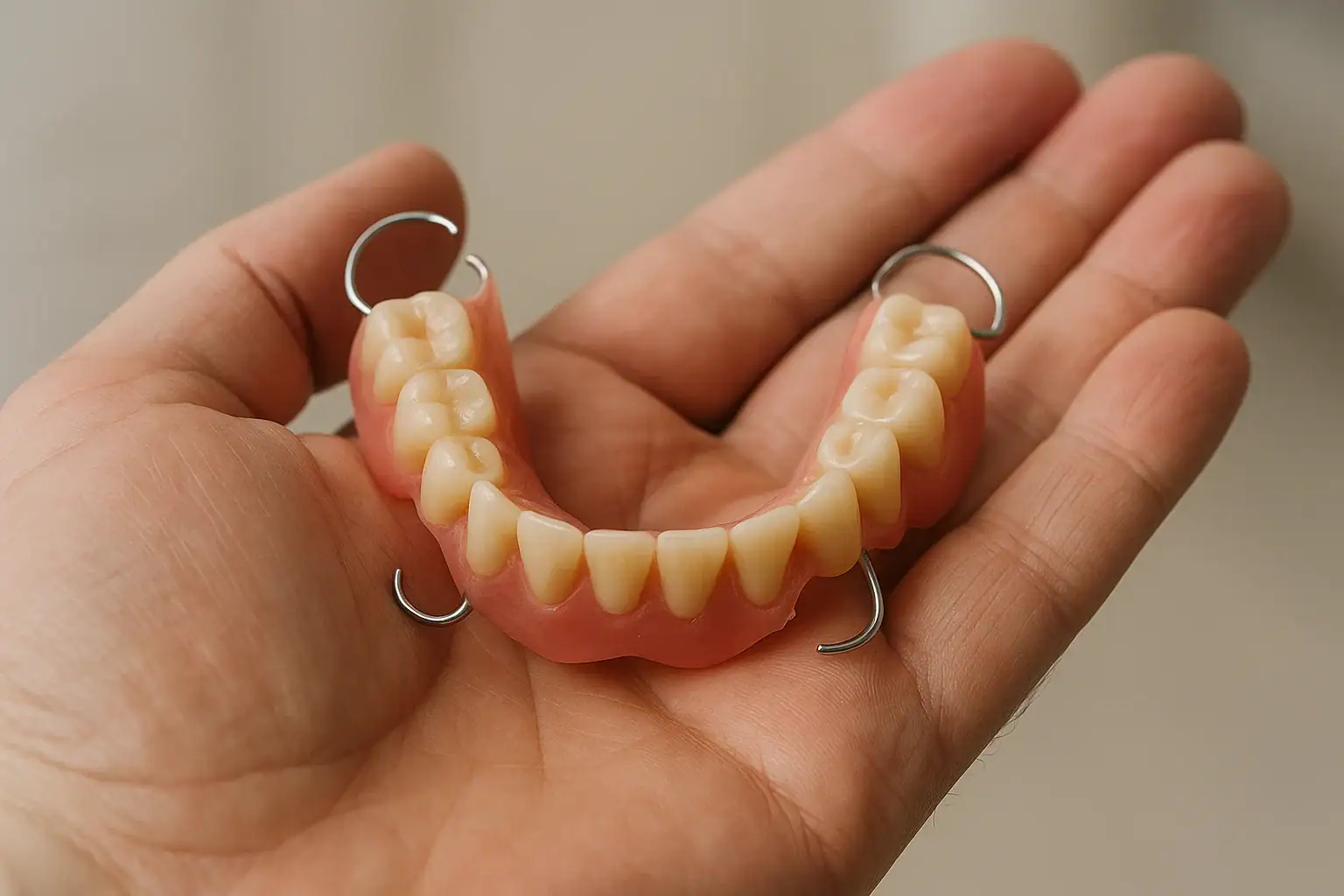
A partial denture is the least expensive and it is removable. It makes the most sense when several teeth are missing.
Implant-supported dentures use a few implants to anchor a full denture so it does not move. Placement goes to the surgeon, and Dr. Beam handles the denture side.
When an implant is not right for you. Not enough bone, uncontrolled gum disease, certain medical conditions, or heavy smoking all lower the odds an implant succeeds. The surgeon evaluates that. We will tell you plainly if we think a different option serves you better.
The Benefits of Getting It Done Right
- A well-restored implant stops being something you think about.
- You bite an apple without planning for it. The crown matches the teeth around it. Nothing clicks or shifts. Your bone stays where it is, so your face keeps its shape. And the teeth on either side are untouched, exactly as they were.
- The crown is where the outcome is won or lost. A crown that is slightly too tall throws off your bite and can stress the implant. A shade that is off announces itself every time you smile. That is the part we control, and it is the part we take our time on.

How to Know an Implant Restoration Might Be Right for You
Signs it is worth the conversation.
- You are missing one tooth or several, and the gaps bother you.
- You have a tooth that cannot be saved and you are planning ahead.
- The teeth on either side of the gap are healthy and you would rather not grind them down for a bridge.
- You wear a partial denture and want something that stays put.
- You have an older bridge that is failing.
- You are generally healthy and your gums are in good shape.
What happens if you wait.
Bone loss is the reason not to wait. The jawbone in an empty socket starts shrinking within months and keeps going for years. Wait long enough and there may not be enough bone left to hold an implant without a graft first, which adds time and cost. The teeth around the gap also drift, which can shrink the space until the crown no longer fits properly.
What a dentist sees that you cannot.
We look at bone height and width, the position of the nerve and sinus, and how your bite loads that spot. Those decide whether an implant will work and where it has to sit.
What we will tell you honestly.
If your bone is not sufficient, if your gum disease needs treating first, or if a bridge genuinely fits your situation better, we will say so. We do not have a reason to push you toward the more expensive option, especially when we refer half the work out.
What Does an Implant Restoration Cost?
Implant treatment is billed in two parts, and knowing that up front prevents an unpleasant surprise.
The surgeon bills for the implant placement and any bone grafting. That is their fee, at their office. We bill separately for the connector and the crown, which is our half.
When we plan your treatment, we give you our portion in writing and tell you to get the surgical estimate too, so you are looking at the real total rather than half of it.
Dental insurance coverage for implants varies a lot. Some plans cover part of the crown, some exclude implants entirely, and many have annual maximums that a full case will exceed. We verify your specific benefits before you commit. CareCredit financing and our in-office Friends and Family plan can help spread out our portion.
No coverage? Ask us about CareCredit financing
and our in-office Friends and Family plan.
Frequently Asked Questions
Do you place the implant here?
No. Dr. Beam does not do implant surgery. She refers you to an oral surgeon she trusts for placement, helps plan the position, and then makes and fits the crown once you have healed.
Why not just go to one place for everything?
Because you get a specialist for the surgery and a dentist who knows your smile for the visible part. Plenty of practices do both in house. We would rather refer the surgical half to someone who does it every day.
How long does the whole process take?
Usually four to eight months from placement to final crown, and most of that is healing while the bone fuses to the implant. You are not left with a visible gap during that time.
Does it hurt?
The surgical placement is done with anesthetic by the surgeon, and most patients report less discomfort than they expected. Our part, fitting the crown, is comfortable and requires no numbing in most cases.
How long do implants last?
The implant itself can last decades and often a lifetime with good care. The crown on top may need replacing eventually, like any crown. Cleanings and good home care are what protect both.
Will the crown match my other teeth?
That is the goal and it is Dr. Beam's strength. We select shade and shape with you, and if it is not right at try-in, it goes back before it is finalized.
Related Services
These come up in most implant conversations.
- Crowns, since the visible part of your implant is one.
Bridges, the main fixed alternative. - Dentures, including implant-supported options.
- Extractions, when a failing tooth has to come out before an implant is planned.

Schedule Your Visit in Louisville
Keeping your smile healthy starts with one easy visit. Whether it
has been six months or six years, you are welcome here, and we
will make it comfortable.